

From Raw Stone to Finished Art
Inside our Jaipur workshop, generational carvers transform solid Makrana marble monoliths and regional sandstones into divine sculptures, temple architecture, and architectural elements using hand mallets and steel chisels.
Follow the physical journey of stone through raw selection, chalk grid mapping, generational chiseling, and export packaging.

The Atelier Transformation Pathway
Experience how raw quarry stone evolves into a sacred architectural creation through five distinct physical states of craftsmanship.

The Uncarved Monolith
Extracted from Nagaur & Bharatpur quarries, raw white Makrana marble blocks carry age-old crystalline purity before entering our Jaipur workshop.
In every block of raw Makrana marble, a sculpture is already waiting. Our duty is simply to remove what does not belong.
Selecting the Solid Block
Every lasting sculpture begins at the quarry face. We source raw blocks of white Makrana marble, pink Bansi Paharpur sandstone, and Dholpur sandstone directly from historic quarries across Rajasthan.
Our senior quarry inspectors examine raw stone monoliths before extraction. We check each block for mineral density, hairline fractures, and structural stability. Only blocks completely free from internal stress lines are carted to our Jaipur workshop.
Density checks eliminate soft pockets or iron deposits before carving begins. Zero unverified blocks enter our studio.
Approved Atelier Stone Species
Makrana White Marble
Nagaur District, Rajasthan98%+ pure crystalline calcite, non-porous structure, age-resistant high luster.
Bansi Paharpur Pink Sandstone
Bharatpur District, RajasthanWarm terracotta-rose grain, exceptional weather durability for temples and arches.
Dholpur Beige Sandstone
Dholpur District, RajasthanUniform beige-biscuit texture, ideal for detailed relief carving and Jali screens.

From CAD Draft to Chalk Grid
Before a chisel touches the stone, our master carvers collaborate with client architects and interior design teams. We translate architectural CAD blueprints and hand sketches into full-scale physical grid lines mapped directly across the stone monolith face.
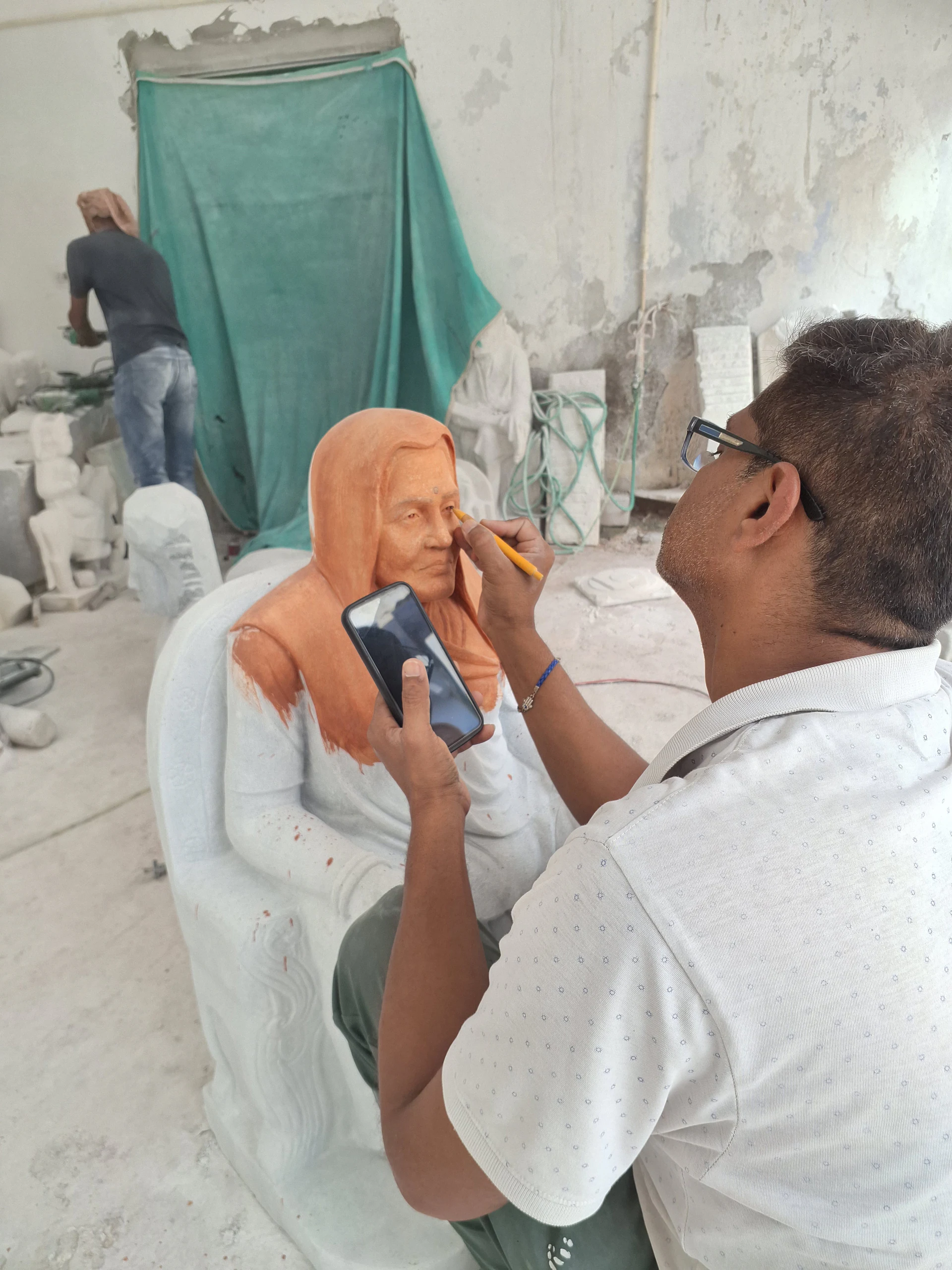
For complex custom commissions—such as bespoke deity statues, ornate Jali screens, or architectural temple columns—artisans hand-sculpt a full 1:1 clay maquette model first.
This physical modeling stage allows client approval of subtle facial expressions, crown proportions, and drape folds before stone cutting begins.
2D Blueprint Conversion
CAD files scaled to physical block dimensions.
Clay Maquette Validation
3D clay bust sculpted to confirm depth and shadow.
Generational Hand Chiseling
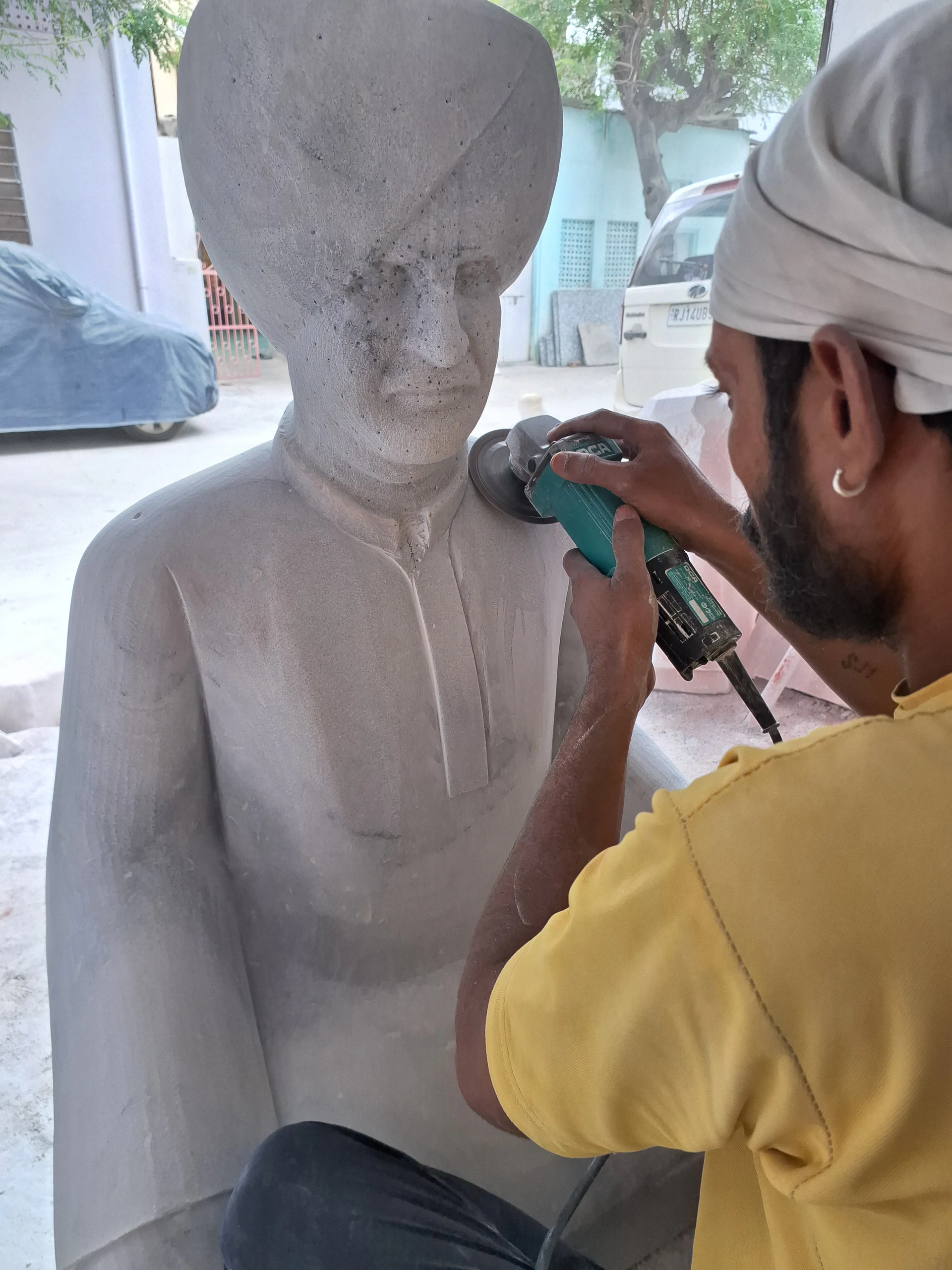
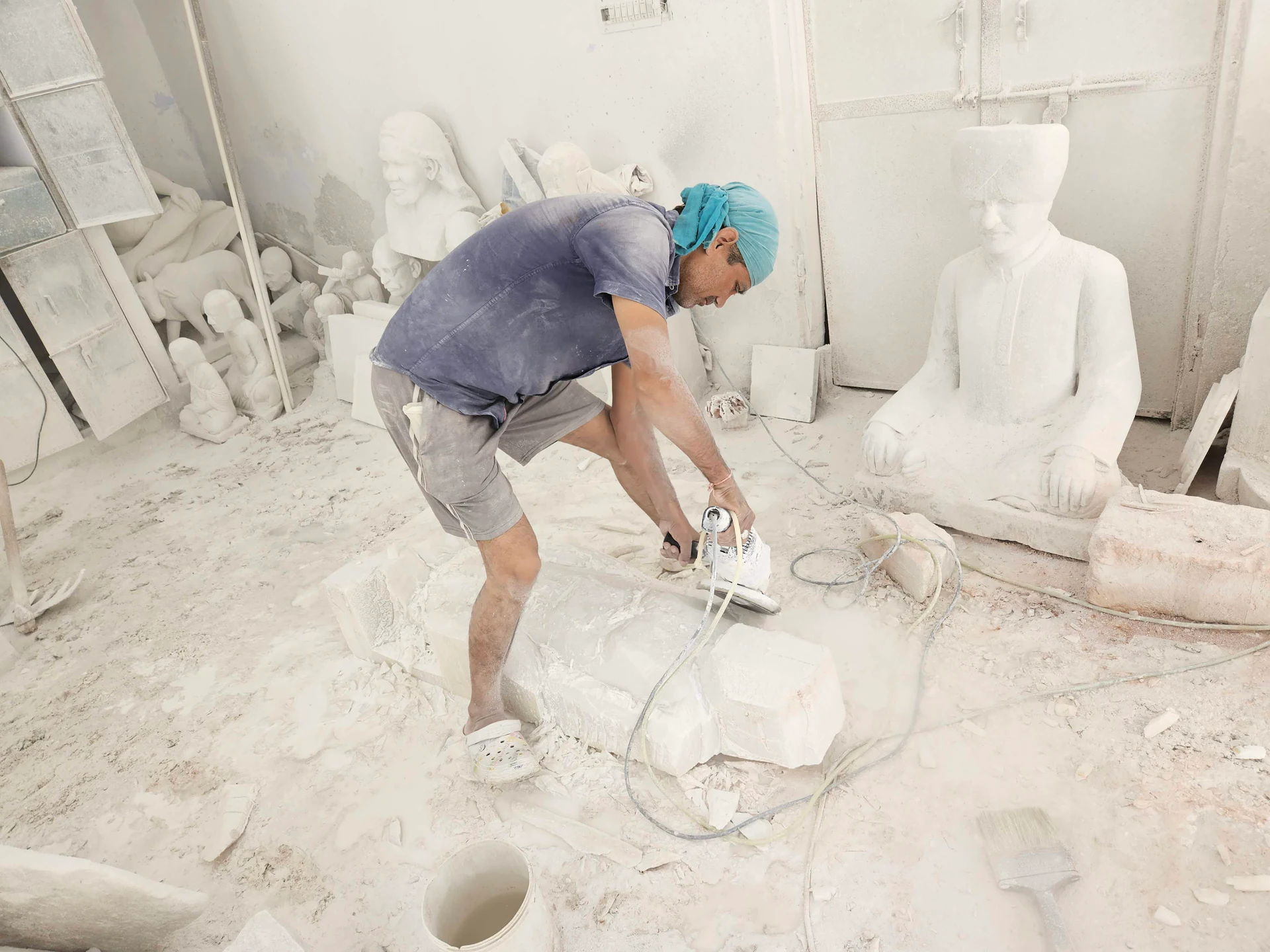
Our carving process relies entirely on traditional manual tools: tempered steel points, flat chisels, claw chisels, and heavy wooden mallets.
By holding traditional hand chisels, our master masons retain direct tactile feedback from the stone. Every strike responds to the natural calcite grain, creating organic depth and delicate shadow contours that high-speed automated machinery simply cannot duplicate.
Architectural columns, deity statues, and intricate wall panels are carved centimeter by centimeter, referencing original scale templates at every stage of depth reduction.
Stone has a natural grain and heartbeat. A machine cuts with raw force, but a master mason listens to the stone to release the form sleeping inside.
Traditional Atelier Toolset
Point Chisel (Tanki)
Roughing out major monolith volume & mass reduction.
Flat Chisel (Chheni)
Precision planes, straight architectural edges, and smooth relief contours.
Claw Chisel (Kanda)
Texture mapping & organic stone surface gradient control.
Wooden Mallet (Mugri)
Delicate force distribution to protect crystalline marble structure.
Refining Serenity, Form & Detail
Once main volumes are carved, the sculpture enters its most delicate phase. Senior master carvers use micro-chisels and fine steel rasps to sculpt divine facial expressions, jewelry adornments, and organic floral drapery.
Sacred Facial Anatomy
Facial features are sculpted following traditional Shilpa Shastra proportion canons. Gentle eye curvature, serene lips, and lotus crown details require steady hand control.

Ornate Jali & Floral Friezes
Pillar capitals, mantels, and perforated Jali screens are undercut by hand to permit natural light filtration and deep shadow relief.
Honing & Quality Inspection
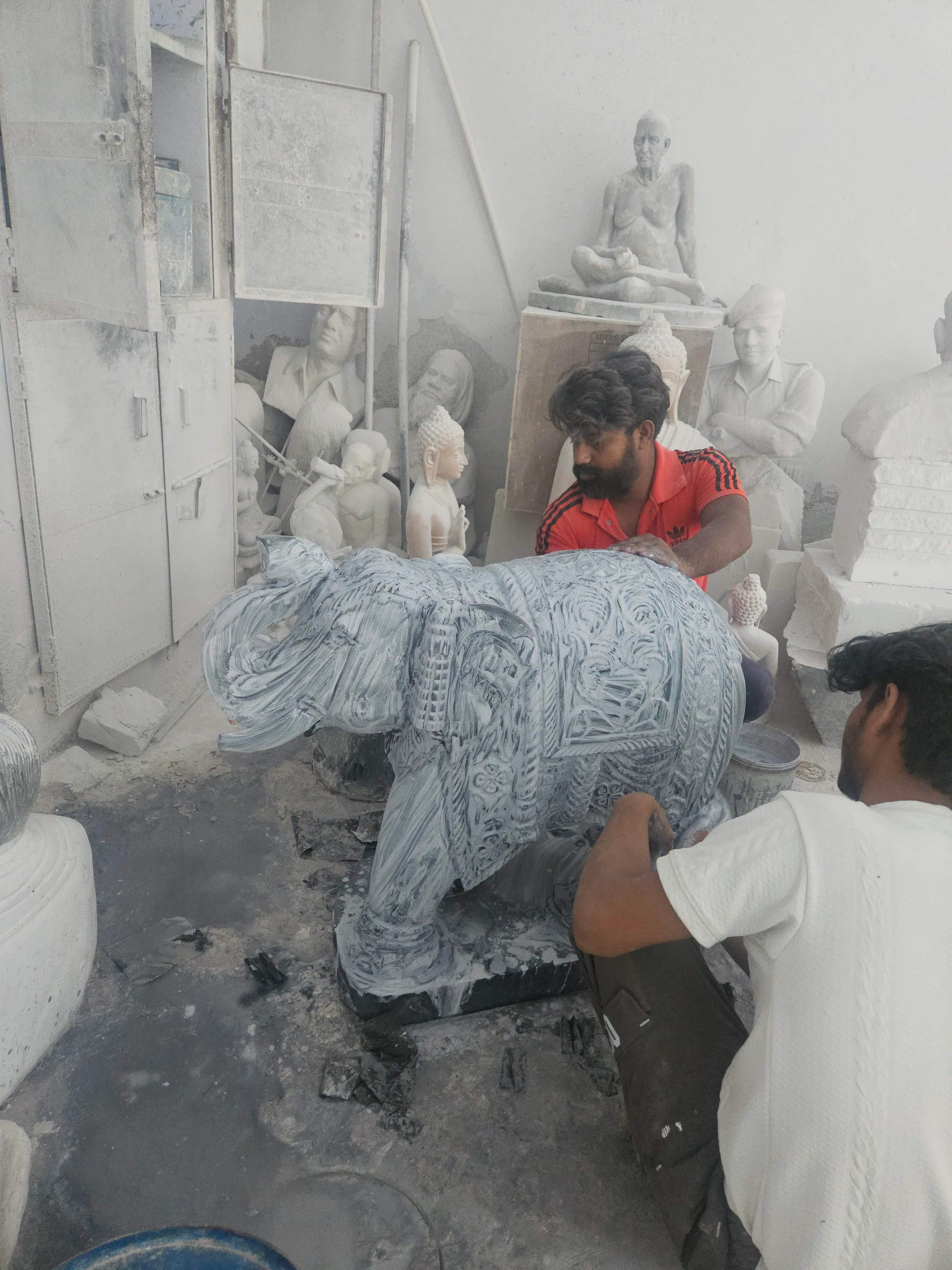
After carving, stone surfaces are honed by hand using progress-graded water stones—moving from coarse 120-grit up to 1200-grit smooth emery.
This natural water-honing process highlights the organic depth and translucent calcite luminosity of Makrana marble without using artificial wax or chemical lacquer coatings.
Atelier Quality Audit Checklist
Master masons measure edge lengths, diagonal symmetry, and carved depth against original CAD blueprints to ensure a maximum tolerance variance of ±0.5mm.
Custom Wooden Crate Packaging
Transporting heavy marble sculptures and carved architectural components around the globe requires uncompromising packaging standards.
We build bespoke wooden crates for each finished creation. Stone elements are floating-braced inside dense shock-absorbing foam beds, ensuring zero surface contact with crate walls.
ISPM 15 Fumigated Timber
Export-certified heat-treated wooden framing for smooth customs clearance worldwide.
High-Density Foam Lining
Custom-contoured shock absorbing inserts preventing movement or corner impact.
Moisture Barrier Wrapping
Sealed anti-humidity foil shielding stone surfaces during ocean freight transit.
A Masterpiece Born for Generations
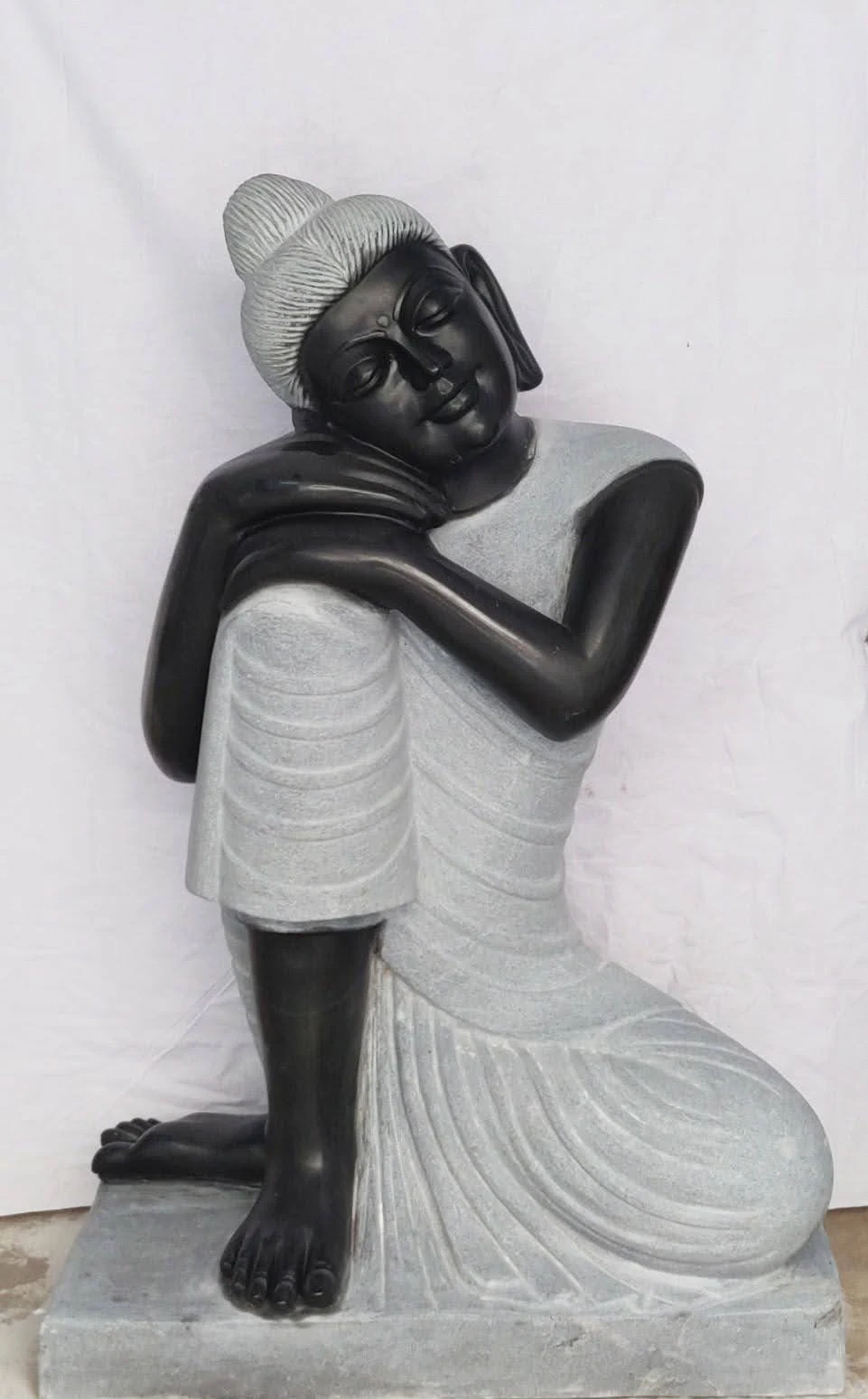
A Masterpiece Born for Generations
From quarry monolith to finished art, the journey through our atelier represents hundreds of hours of focused hand chiseling, blueprint alignment, and water-stone honing.
Whether sculpting a sacred deity idol, an architectural column, or a bespoke stone mantel, our promise remains constant: 100% handcrafted craftsmanship carrying timeless grace.
Bring Jaipur Stonecraft to Your Project
Collaborate with our master masons to custom-carve white marble deity statues, temple architecture, garden fountains, fireplace mantels, or bespoke stone friezes.